

My dissertation identified molecular pathways involved in thermal stress-hardening of Caribbean corals propagated for restoration in Florida. The goal was to understand the mechanisms of thermal priming so that assisted acclimatization could one day be used as a restoration technique.
We showed in Coral Reefs that pre-exposure to a variable temperature treatment let the critically endangered staghorn coral, Acropora cervicornis, endure heat stress for days longer before bleaching. Follow-up work in Ecology and Evolution found that the same treatment changed gene expression in A. cervicornis but not in Pseudodiploria clivosa, highlighting the need for species-specific approaches. I also studied A. cervicornis transplanted to a marginal, nearshore environment (Frontiers in Marine Science).
Experiment 1: Stress-Hardening Using Temperature Variability (2019–2020)
In October 2019, I collected corals from Dr. Diego Lirman’s coral nursery for my first experiment, which looked at stress-hardening of different genotypes used in coral restoration efforts. With the help of my lab mates, we collected many coral colonies to bring back to the lab for fragmenting.
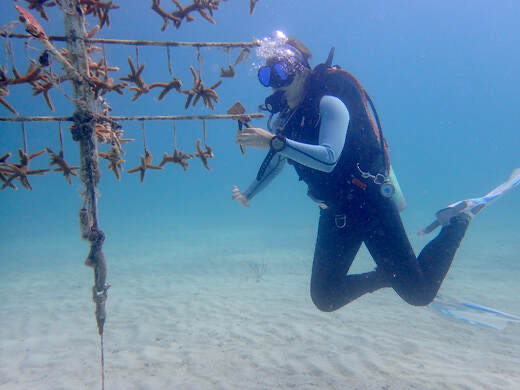
Photo by Nikki Besemer
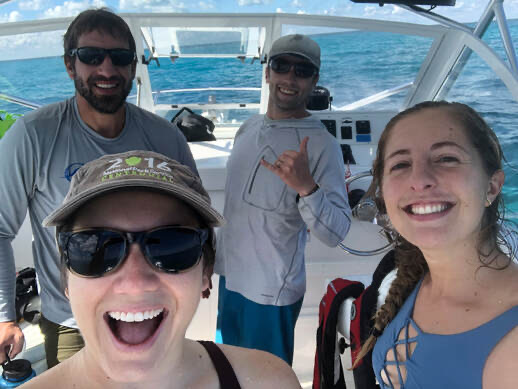
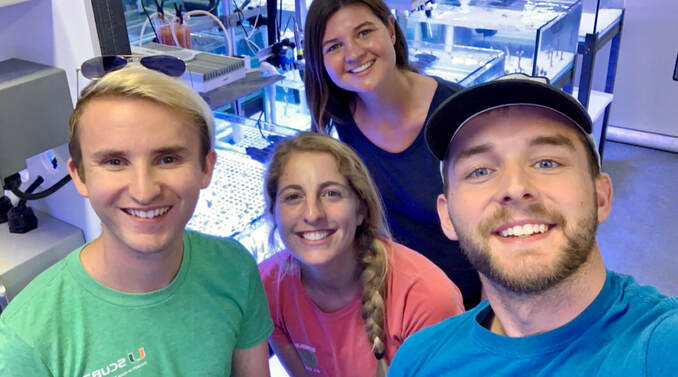
Dr. Anderson Mayfield, Nate Formel, Nikki Besemer, and myself (NOAA AOML ACCRETE Lab)
After collecting the coral colonies from the field, they were fragmented and then given time to acclimate to their tanks before the experiment began. The experiment involved a two month stress-hardening treatment. After this variable temperature treatment, all corals were put into a rapid bleaching assay, where the temperature rose to 32 degrees C.
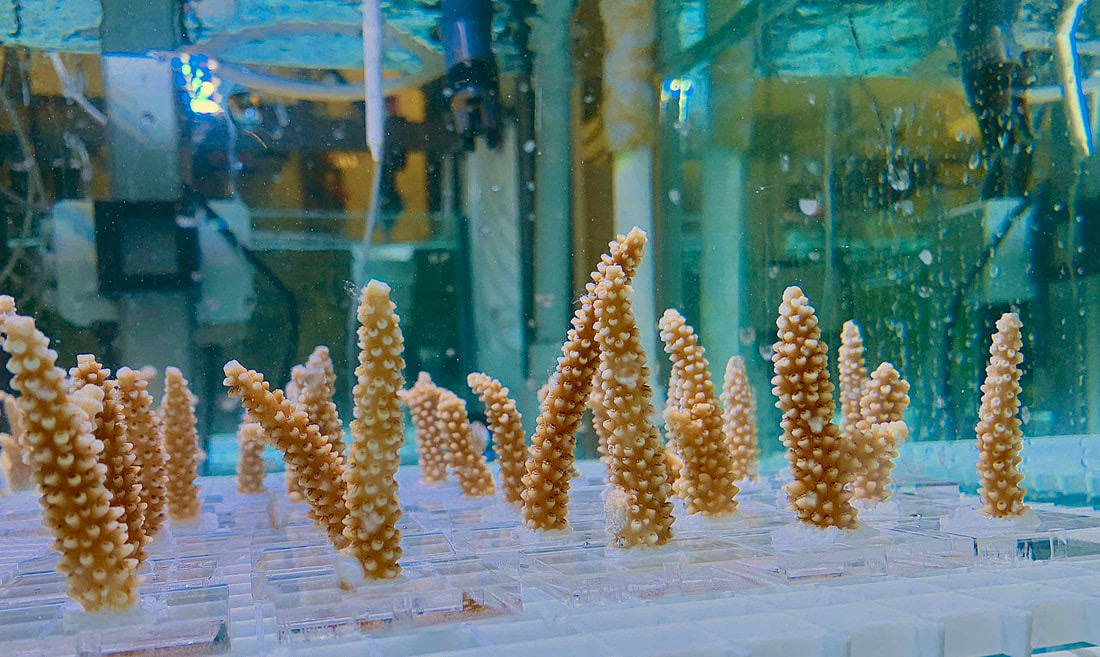
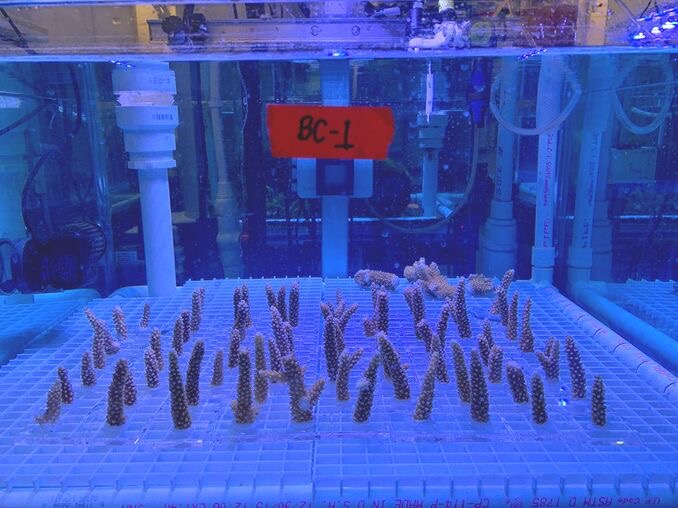
Corals post-fragmenting, each on their individual tile with a randomly assigned number. The corals were given one week to acclimate in their new tanks!
Fragmenting team after making 370 fragments! Nash Soderberg, Isabelle Basden, Austin Schlenz, and myself (NOAA AOML ACCRETE Lab)
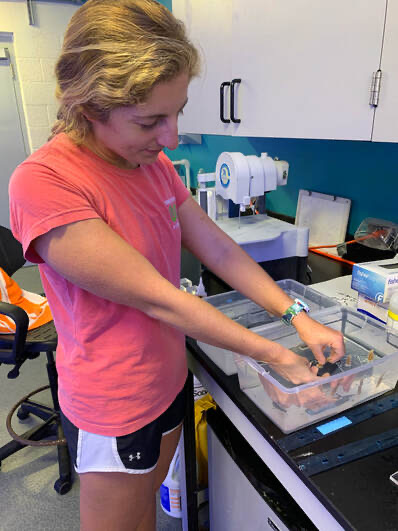
We affixed the corals to their tiles using superglue. It cures quickly in water!
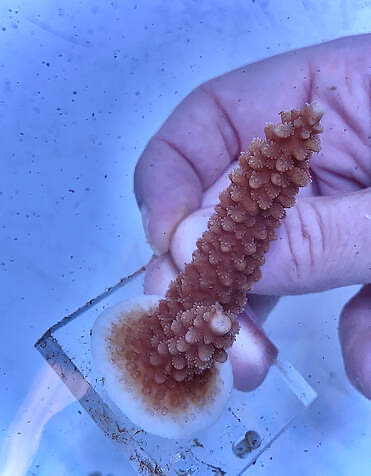
A happy coral with its tentacles out. This photo was taken a few months after fragmenting - you can see at the bottom around the fragment a white, thin ring. This is the coral calcifying (and growing!) on its tile.
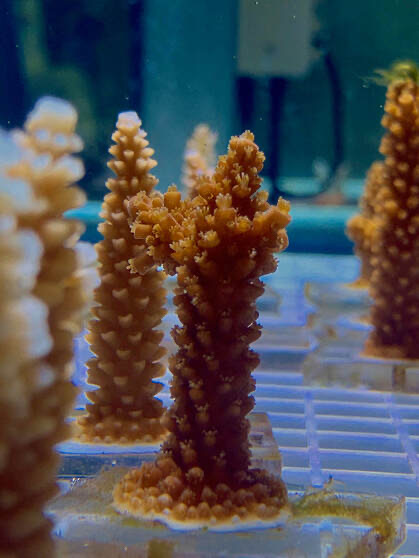
A happy Acropora cervicornis fragment
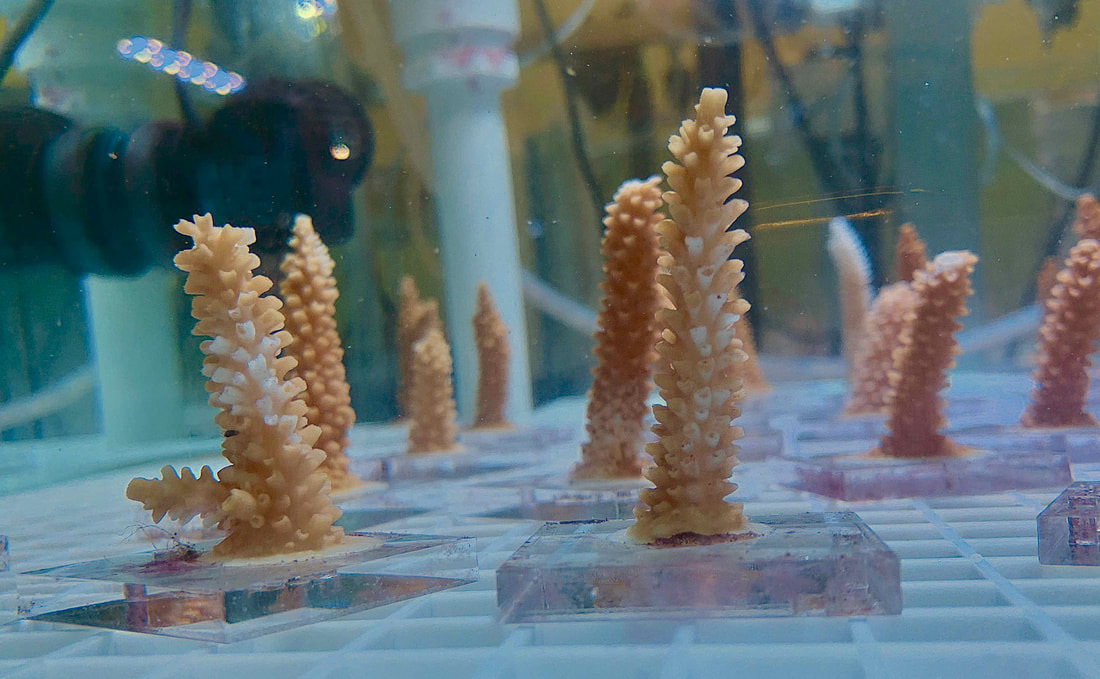
Signs of stress - some paling and tissue loss on the corals
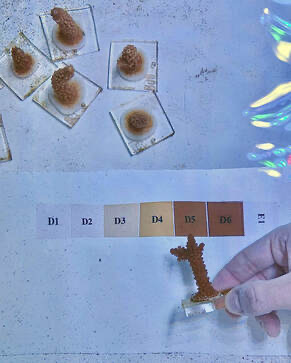
The CoralWatch color scoring technique for assessing coral health
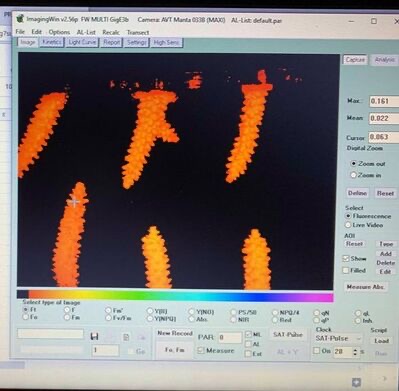
Pulse amplitude-modulated (PAM) fluorometry used to measure the photochemical efficiency of the coral’s algal symbionts.